The physics of energy materials, resolved in space and time

Inside every solar cell, light-emitting diode and battery, excitons, charges and ions move on time and length scales which are at the limit of what science can measure. We build a new generation of ultrafast and operando optical methods to resolve these processes as they happen, and translate the resulting physical insight into new materials and device concepts.

Research

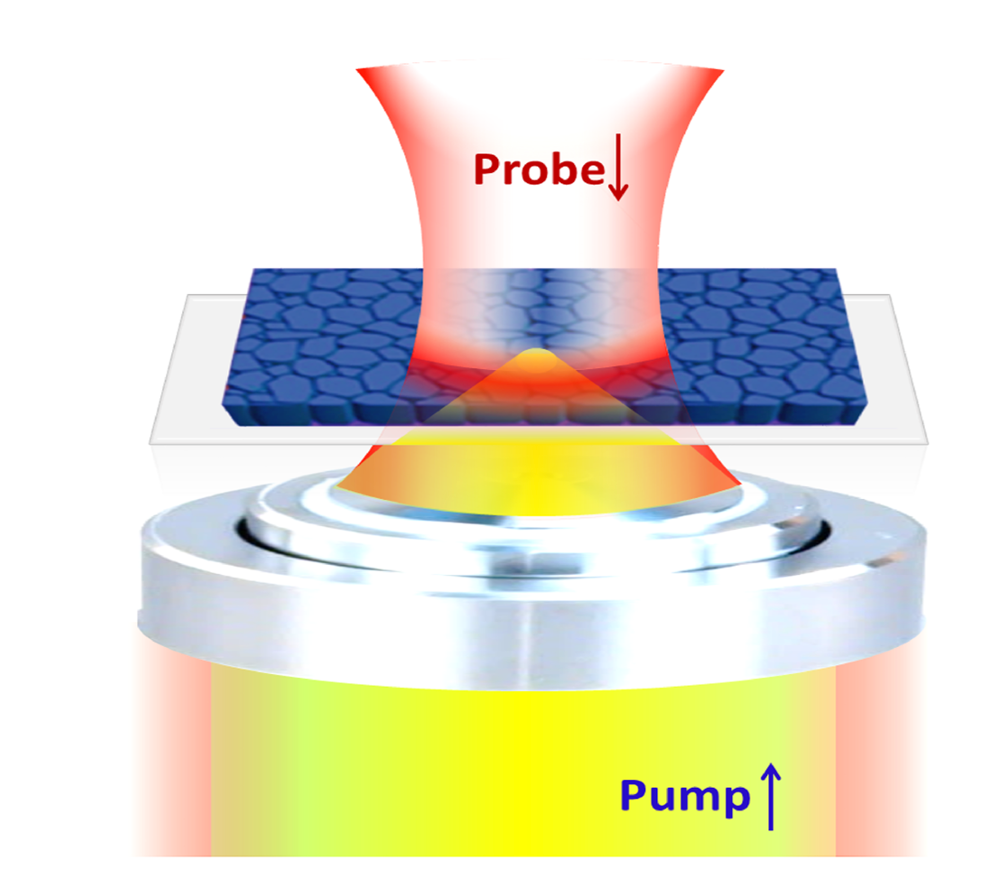
Illustration of a pump-probe optical microscope: pump and probe laser beams focused through an objective onto a thin-film sample

Ultrafast spectroscopy and microscopy

Many of the processes that govern solar cells and light-emitting materials are over within a trillionth of a second. We build instruments that follow them with a time resolution below 10 femtoseconds and a spatial precision below 10 nanometres. They allow us to see how energy and charge move, and how molecular vibrations influence them.

For specialists

Transient absorption microscopy, impulsive vibrational spectroscopy and field-resolved detection.
Ghosh et al., Nature (2024); Zimin et al., Light Sci. Appl. (2026); Ashoka et al., Nat. Commun. (2022)

Animated optical microscopy images of a lithium cobalt oxide particle during battery cycling

Charge photometry

Charge photometry: watching batteries at work

When a battery charges, lithium ions move into and out of microscopic particles in its electrodes. We developed charge photometry, an optical microscopy that follows this process in individual particles inside a working battery. It has shown, for example, that lithium enters graphite in sudden, localised steps rather than smoothly.

For specialists

Operando interference reflection microscopy in which changes in optical contrast report local state of charge, independently of the battery chemistry. Also applied to photo-redox phase engineering and electrochemical doping.
Merryweather et al., Nature (2021); Han et al., Nature (2026); Lim et al., Nature (2024)

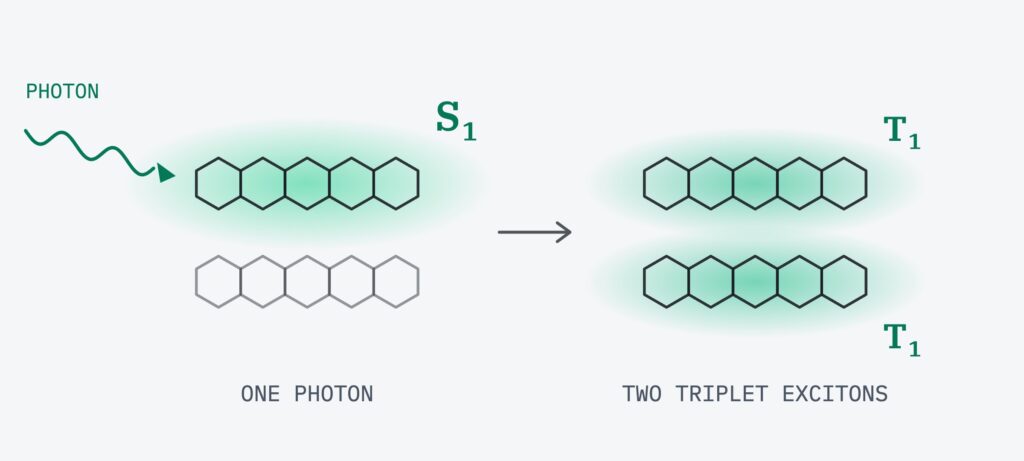
Illustration of singlet fission: one absorbed photon creates a singlet exciton on one molecule, which divides into two triplet excitons on neighbouring molecules

Singlet fission

Singlet fission for solar energy

In certain organic molecules, the energy of one absorbed photon of visible light divides into two excited states. A conventional silicon solar cell wastes the excess energy of blue and green light as heat, so capturing both excited states could raise its efficiency above the limit for a single-junction cell. We study how fission occurs and how its products can be harvested.

For specialists

Triplet-pair formation and dissociation, and singlet-fission photon multipliers designed to exceed the Shockley–Queisser limit.
Rao and Friend, Nat. Rev. Mater. (2017); Thampi et al., JACS (2018); Ashoka et al., Nat. Commun. (2022)

Illustration of light-emitting lanthanide-doped nanoparticles

Organic–lanthanide nanoparticles

Nanoparticles containing lanthanide ions emit light of very pure colour, which is valuable for medical imaging and optical communication, but they are electrical insulators and absorb light weakly. We attach organic molecules that act as antennas, collecting energy and passing it to the lanthanide ions. With this approach we have made light-emitting diodes from these particles, including devices that emit at the wavelengths used in fibre-optic communication.

For specialists

Triplet energy transfer from organic semiconductors to lanthanide-doped nanoparticles.
Han et al., Nature (2020); Yu et al., Nature (2025); Zhu et al., Nat. Chem. (2026)

From the laboratory to application

Two companies have grown out of the group’s research.

Founded 2022 · Batteries

illumion

Develops charge-photometry instruments for battery research in academia and industry.

Founded 2020 · Solar energy

Cambridge Photon Technology

Is developing singlet-fission films designed to increase the efficiency of silicon solar panels.

Join the group

We welcome enquiries from prospective PhD students, postdoctoral researchers and applicants for research fellowships. Members of the group work across optics, chemistry and device physics. They learn to build and run ultrafast instruments, make and characterise materials, and analyse complex data.

We support postdoctoral researchers in applying for independent fellowships.

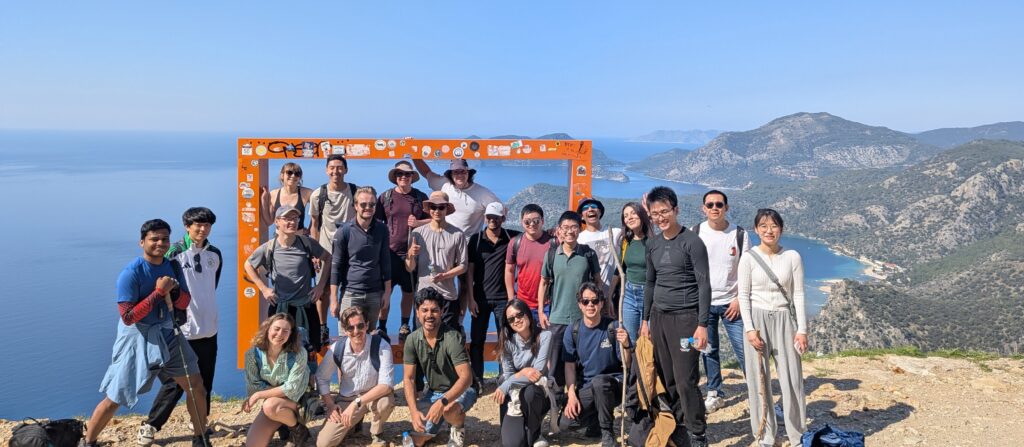
Members of the Rao Group on the Lycian Way in Türkiye during the 2026 group retreat
Group retreat on the Lycian Way, Türkiye, 2026

Supported by

UKRI Engineering and Physical Sciences Research Council
European Research Council
Winton Programme for the Physics of Sustainability
Maxwell Centre